10.11.2026
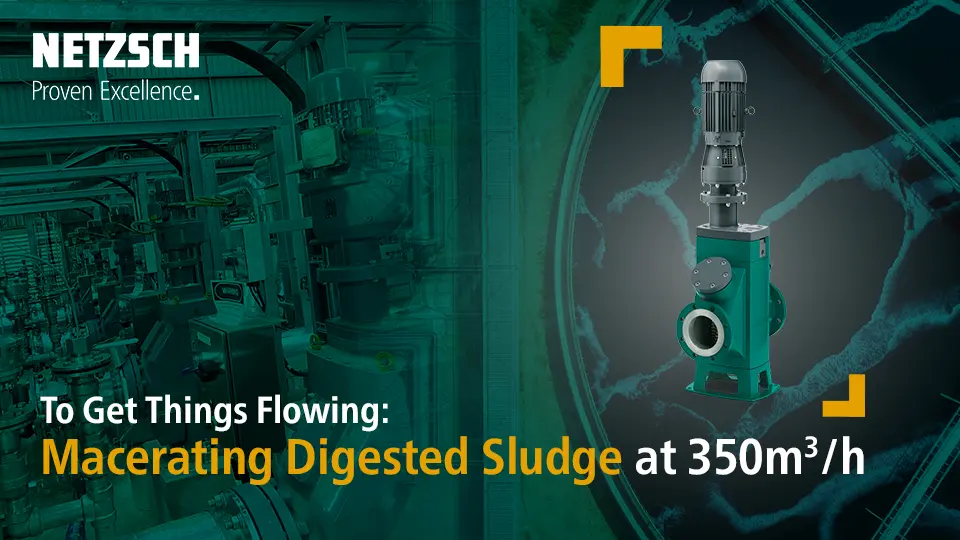
To get things flowing: Macerating digested sludge at 350 m3/h
Wastewater treatment plants are always in danger: Even after digestion, inorganic components such as rags, plastics, wipes, and fibrous materials remain in the sludge. They threaten to clog or even damage pumps, centrifuges, and other systems. To reduce the particle size, improve the flow properties of the sludge, and thus protect their downstream equipment, a new wastewater plant in Australia implemented N.Mac® inline twin shaft grinders from NETZSCH.

Individual Consulting
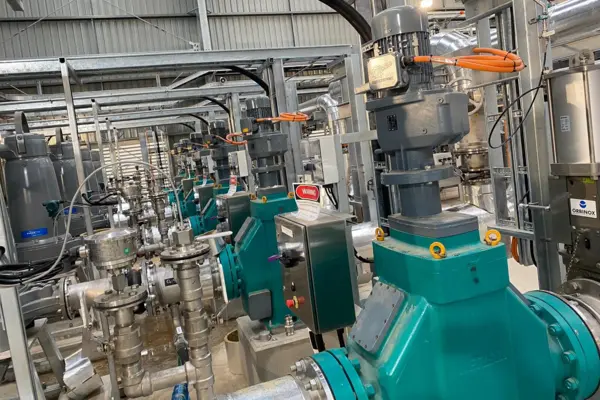
In sludge-handling wastewater treatment lines, the toughest challenge is not selecting a pump. It is about keeping viscous, digested sludge moving reliably, despite the rags, wipes, plastics and other non-digestibles remaining in it. Left unmanaged, these materials risk contaminating pumps, centrifuges, and heat exchangers. This can cause blockages and accelerate wear, which require time-consuming – and sometimes even dangerous – manual cleaning and maintenance work. To mitigate these threats and create a uniform, pumpable feed, a new wastewater treatment plant in Australia is complementing its comprehensive NETZSCH pump setup with a total of six inline grinders from the same manufacturer.
Efficient solids reduction for consistent, pumpable sludge
With solids contents ranging from 2.5 to 4 percent, the digested sludge is quite difficult to handle, both in terms of viscosity and the presence of debris. NETZSCH specialists thus recommended N.Mac® 350i twin shaft grinders, which are specifically engineered to address these conditions: Two counter-rotating shafts, each fitted with replaceable cartridge-style cutting blocks of varying tooth profiles, continuously pull the sludge into the grinding chamber. As the fluid passes through, non-digestible solids are fragmented into much smaller pieces, while fibrous materials are cut and dispersed. The knives used for this application are thermally hardened to increase durability as well as impact resistance, and thus reliably grind even the toughest solids.
This efficient maceration process ensures that the sludge maintains a homogenous, pumpable consistency, making it less likely to form blockages or tangles within subsequent pumps, centrifuges, or piping. At a flow rate of up to 97.2 liters per second, the robust, slow-speed cutting action reduces wear on the grinders – and it shows: “In five years of operation, the N.Mac® 350i units have delivered trouble-free service, even with high-solid or variable sludge loads. No cutter cartridges or spare parts have been required so far,” Mohamad Allam, NETZSCH Australia Sales Manager, points out.
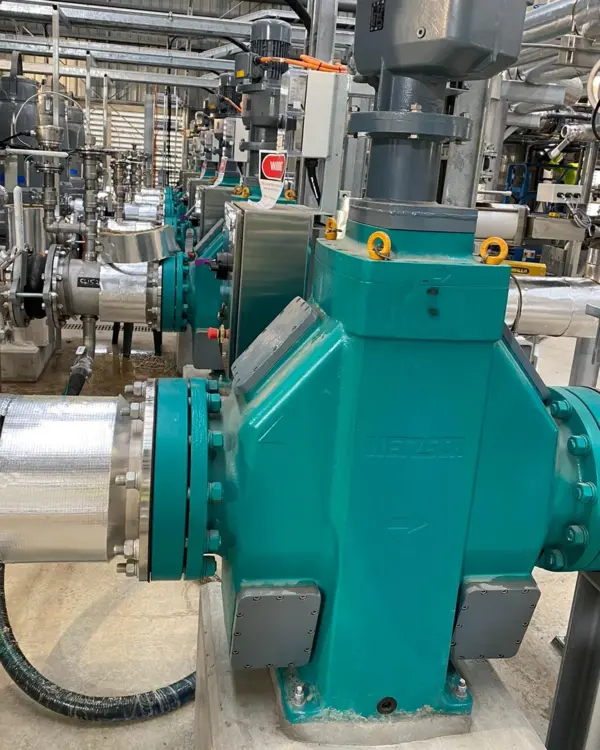
However, in case maintenance eventually becomes necessary, the N.Mac® 350i’s modular assembly of shafts and seals allows for easy access to relevant components. The cartridge-style cutters enable quick replacement or inspection of wear parts with minimal downtime. Thanks to this easily accessible design, routine maintenance tasks are straightforward and can be completed efficiently by on-site staff, reducing operational interruptions.
All-in-one reliability with NETSCH
The initial decision to turn to NETZSCH for the plant’s sludge-handling technology was a strategic one: NETZSCH provided not only the six twin shaft grinders, but also a total of 16 progressive cavity pumps as well as two rotary lobe pumps for the project. By selecting a single supplier for both grinders and essential pumps, the project team ensured that all major components were engineered for full compatibility. This reduces the likelihood of interface problems and simplifies both commissioning and future maintenance.
“Operators and maintenance staff also benefit from a consistent training experience and straightforward spare parts management, making day-to-day operations more predictable and efficient,” adds Mohamad Allam. Ultimately, relying on NETZSCH as a single point of contact gave the new plant added confidence in system reliability and ensured smooth coordination on every project stage.