
15.06.2026
Progressing Cavity Pump for Demanding Industrial Processes
In numerous industrial sectors, conveying of highly viscous, abrasive or solids-laden media is a major engineering challenge. Process reliability, dosing accuracy, and ease of maintenance directly impact plant availability and, in turn, profitability. The progressing cavity pump has proven itself in this environment as a robust, adaptable positive-displacement pump.
We will show you the advantages of a progressing cavity pump, how it works, the areas of application where you can benefit and how to find the right model for your application.
Advantages of the progressing cavity pump

Customised Consulting
- Low pulsation and continuous delivery
- High dosing accuracy thanks to speed-proportional volume flow
- Suitable for highly viscous, abrasive and solids-laden media
- Gentle pumping of shear-sensitive products
- Flexible adaptation to different process requirements
These properties make the progressing cavity pump a versatile solution for demanding industrial pumping tasks.
Functional principle of the progressing cavity pump
Progressing cavity pumps are a type of rotary positive displacement pump. Their main components are a rotor and a stator, which remain motionless. The rotor, which is connected on one side by a joint or elastically, is a type of round threaded screw. The axis position oscillates on the outlet side. The hollow stator is elastic and has the same pitch length as the rotor. This leaves delivery chambers between the stator and the rotor, which continuously move from the inlet to the outlet. The size of the conveying chambers and the associated conveying volume depend on the unit’s size. Replacing the rotor and stator makes it easy to adapt the unit to the operating conditions. Since the cavities remain constant in shape, the conveyed medium is not compressed. This allows you to convey not only fluids but also solids.






Progressing cavity pumps are used in a wide range of applications. In wastewater technology, for example, progressing cavity pumps are used to convey sewage sludge or dewatered sludge, while in the chemical industry, they transport viscous or abrasive media. In the food and beverage industry, the focus is on the hygienic conveyance of paste-like products and in biogas plants, substrates with a high solids content are reliably pumped. In all cases, the pump’s ability to convey complex media with a defined volume flow without impairing the product through high shear forces is crucial. At the same time, materials and sealing systems must be adapted to chemical, thermal and mechanical stresses.
How to find the right progressing cavity pump

The design of a progressing cavity pump requires an analysis of the media and process data. In addition to static viscosity, temperature profiles, pressure requirements, and the abrasiveness of the pumped medium, these factors play a key role. Pipe lengths, installation situation and operating mode also influence the dimensioning. Precise coordination of rotor and stator geometry, along with the selection of suitable elastomers, is crucial for service life and energy efficiency. If these parameters are not adequately accounted for, increased wear or thermal overload can result. For engineers and process technicians, this means the pump must always be considered an integral part of the overall system.
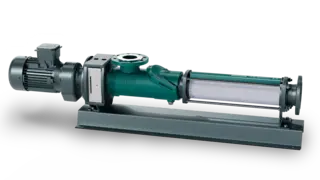
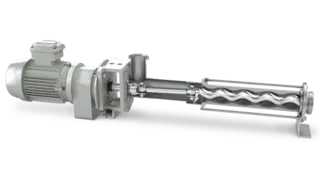
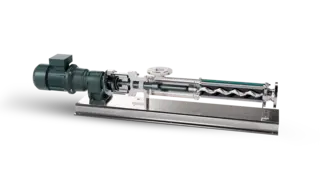
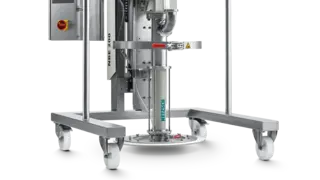
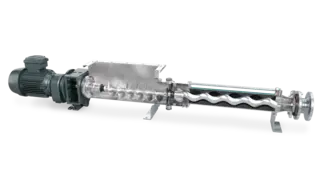
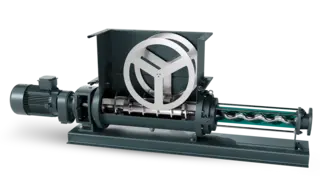
As a global specialist in handling complex media, NETZSCH Pumps & Systems offers rotary lobe pumps, multi screw pumps, peristaltic pumps and progressing cavity pumps. The NEMO® progressing cavity pump product family covers a wide range of applications due to its various sizes and designs. The systems can be tailored to your specific process requirements in terms of size and delivery rate as well as material combinations, sealing systems and drive concepts. In addition, depending on your requirements, versions for hygienic applications and robust industrial variants for demanding operating conditions are available. Are you wondering which model is right for your application? We have the answer.
Service throughout the entire life cycle
We support you throughout the entire life cycle, from designing the optimal configuration for your process to providing support during commissioning and condition-based maintenance concepts to modernisation and performance adjustments in response to changing process requirements. Our experts collaborate with you to analyse operating data, wear behaviour, and optimisation potential to extend service life and stabilise long-term process reliability. With our original spare parts, training courses for operating and maintenance personnel, and an international service presence, we lay the foundation for long-term, reliable, and economical use of your plant.
Especially with highly viscous, abrasive, or solids-laden media, properly designed progressing cavity pumps are crucial for process stability and cost-effectiveness. Our experts support you right from the beginning in finding a comprehensive solution to this challenge and making your conveying processes safe, efficient and predictable in the long term.