27.11.2025
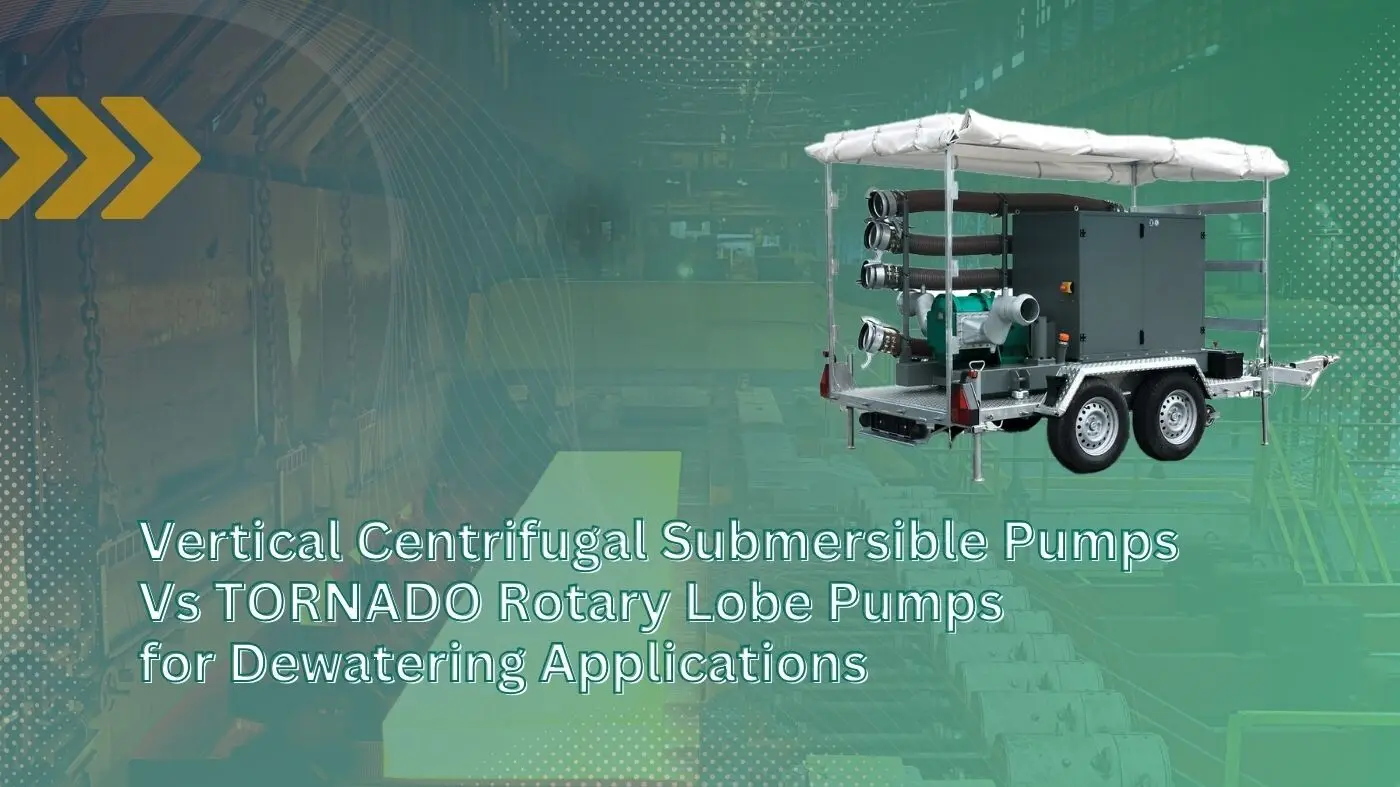
Vertical Centrifugal Submersible Pumps Vs TORNADO® Rotary Lobe Pumps for Dewatering Applications
In Mining, Mineral Processing & Metal Production, Pits and Sumps play an essential role in managing water, wastewater, and other fluids that accumulate during various processes. These structures are designed to collect, store, and handle liquids, preventing them from contaminating the plant or interfering with operations.

Customised Consulting
Common Challenges in Pit & Sump Operations
- Clogging and Blockages:
Pits and sumps accumulate a mix of water, effluents, solids, and sludge. Over time, debris and particles can clog suction pipes, pumps, and discharge systems — resulting in inefficient fluid removal, overflow, or complete pump failure.
- Maintenance and Cleaning
Steel plant sumps are extremely challenging to maintain due to the presence of abrasive particles, heavy oils, slag, and acidic solutions. Particles, debris, and slag settle at the bottom, increasing the dead volume of the pit and hindering operations. This accumulation not only reduces water storage capacity but also makes maintenance more tedious, costly, and time-consuming, while posing a risk of equipment damage if not cleaned regularly.
- Pump Failures
Operating in harsh, corrosive, and abrasive environments, pumps are vulnerable to clogging, wear, and electrical issues. Unplanned failures not only disrupt operations but can also cause contamination and overflow incidents.
Possible Challenges with other pump technologies that are used - Vertical submersible centrifugal pumps
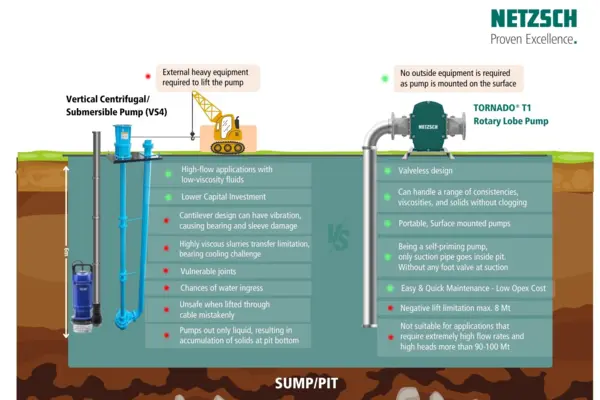
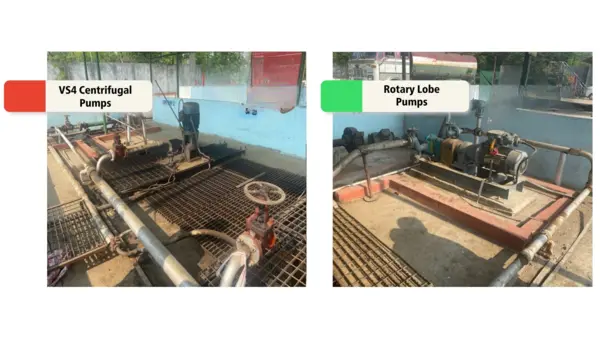
When it comes to pit and sump operations, not all pump technologies are built to handle the harsh realities of steel plant conditions. Many facilities still rely on vertical centrifugal or submersible pumps, but these often bring more challenges than reliability.
- Difficult to Install & Maintain:
Vertical pumps require external heavy equipment for installation and removal, making routine maintenance or inspection time-consuming, manpower-intensive and adding to the costs. - Vibration and Mechanical Stress
Due to cantilever design with long shafts and multiple couplings, these pumps are prone to vibration, leading to bearing and sleeve damage, premature wear, and reduced efficiency. - Highly viscous slurries conveyance limitations
Handling viscous fluids or high-concentration slurries demands additional bearing cooling arrangements and can significantly reduce pump performance. Centrifugal pumps tend to leave solids behind and pump out mainly liquid, leading to solid accumulation at the pit bottom. - Cable Damage & Safety Concerns
Submersible designs face risks of cable damage and water ingress, necessitating multiple safety protections to avoid electrical failures or hazards. - Operational Demands of Steel Plant Environments:
Exposure to heavy oils, slag, and acidic fluids increases wear and maintenance frequency.
Why TORNADO® is the Optimal Choice for Dewatering Applications?
Engineered for continuous and reliable operation, the TORNADO® Rotary Lobe Pump ensures smooth handling of liquids with high solids or sludge content — without clogging or interruption.
- No Heavy or External Equipment Needed
The pump is mounted on the surface, eliminating the need for cranes, lifting tools and manpower during maintenance. - Valveless, Clog-Free Design
Its valveless construction and large passage allow easy handling of high-viscosity slurries and solid-laden fluids — without clogging. - Easy Maintenance
Because the pump is surface-mounted, all service and inspection can be done safely and quickly, without entering the pit. - Self-Priming & Efficient Suction
Only the suction pipe is submerged, requiring no foot valve, ensuring reliable priming and smooth operation — even with variable liquid levels. - Gentle, Pulsation-Free Pumping Action
The TORNADO®’s rotary lobe design ensures smooth fluid transfer while preventing sediment buildup, maintaining efficient and consistent dewatering.