WASTE WATER WITH IMPURITIES
Continuous, Reliable Pumping of Wastewater With Impurities
How to protect your wastewater pump from blockages and breakdowns
The Riviera del Conero, on the Italian Adriatic coast south of Ancona, attracts numerous tourists each year. Around Monte Conero and the Parco del Conero nature reserve, visitors enjoy nature, beaches and historic towns such as Sirolo. But what happens when the sanitary facilities at a campsite repeatedly fail? An operator near Sirolo faced precisely this challenge. The wastewater pump regularly became blocked by improperly disposed impurities, with immediate effects on operational safety and guest satisfaction.
As a global specialist in handling complex media, NETZSCH Pumps & Systems offers innovative solutions for wastewater applications, among other things, to prevent such problems. We will show you how to reliably convey wastewater containing impurities without problems.

Individual Consulting
Challenges when pumping wastewater
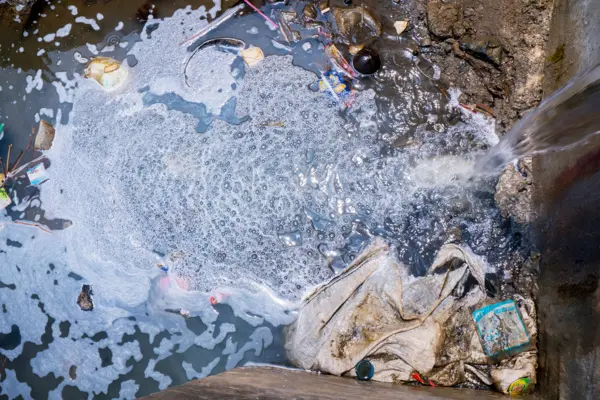
Wastewater from sanitary facilities at campsites has a highly variable and inhomogeneous composition. In addition to toilet paper and faeces, unsuitable foreign substances regularly enter the system, such as disposable towels, wet wipes containing plastic fibres, sanitary products such as nappies, and tissue products containing cellulose. These materials are not designed for disposal by flushing them down the toilet and do not decompose in the sewage system, or only very slowly. Tear-resistant synthetic fibres, in particular, tend to form clogs, while large-volume solids can cause blockages in the area of impellers, seals, or narrow gaps. In addition, application-specific conditions exacerbate the situation. Flow rates vary considerably with campsite occupancy, leading to changing flow conditions. Limited pipe diameters also increase the risk of deposits.
Blockages threaten system availability
A wastewater pump was installed at the campsite in Italy, which pumped the collected wastewater into a higher pipe network. Due to the steep terrain and the existing pipe dimensions, a static back pressure of around eight bar was generated. The pump was therefore already operating under demanding hydraulic conditions. Repeated contamination with impurities regularly caused malfunctions. Solids and fibrous components led to pump blockages and clogging of the rotating components. As a result, the sanitary facilities had to be taken out of service at times. The operating personnel were forced to shut down the pump at short intervals, manually remove accumulated impurities, and thoroughly clean the unit. In addition to the immediate increase in maintenance and cleaning costs, these unplanned interventions impaired the availability of the entire system, especially during the tourist high season with correspondingly high utilisation.
Grinders for continuous protection against blockages
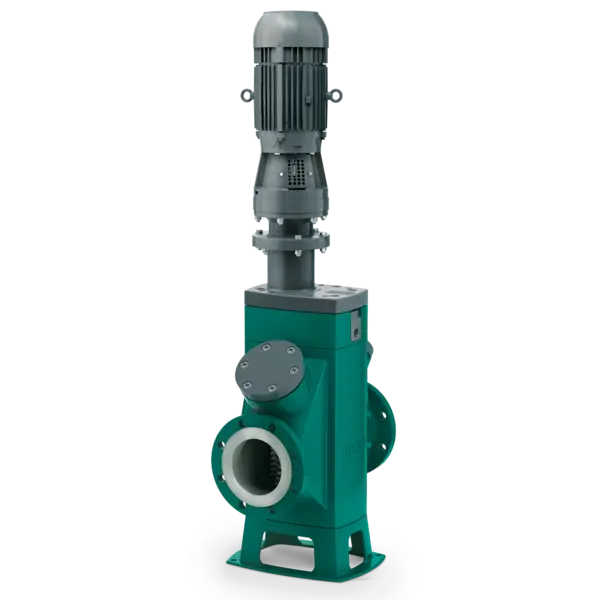
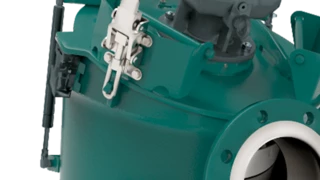
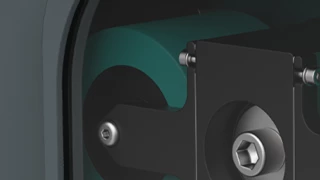
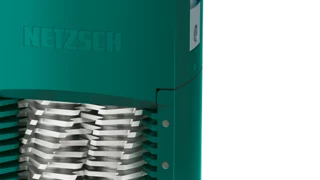
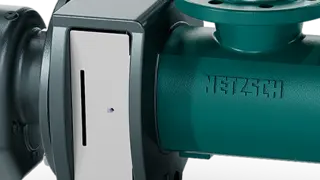
To permanently remedy the problems, an N.Mac® inline twin shaft grinder was installed upstream in the sewage pipe. The aim was to grind the impurities before they entered the pump, thereby increasing the long-term operational reliability of the entire system. The N.Mac® is a slow-running twin shaft grinder with a compact inline design. It is integrated directly into the pipe and treats wastewater, ensuring downstream pumps operate reliably and without blockages, even with high solids and fibre content. This is based on a cutting mechanism integrated into the housing cover. It combines a double-sided cutting plate made of hardened, wear-resistant steel with a knife head with carbide cutting blades. This design ensures a long service life. Even tear-resistant hygiene products are reliably shredded. Two counter-rotating cutting elements made of special steel ensure active feeding of coarse materials and controlled grinding. This effectively prevents clogging and significantly reduces the risk of blockages in the downstream pump. The flow-optimised housing geometry also ensures a continuous supply of foreign matter to the cutting unit. For ease of servicing, both the cutting unit and the shaft seal are designed as cartridges. Complete units can thus be replaced quickly and modularly, reducing maintenance time and increasing plant availability. An integrated flywheel also supports the grinding process, ensuring smooth running and reducing load peaks. Among other things, this leads to lower drive power requirements and, correspondingly, lower energy consumption.
At the campsite in Italy, a cutting unit with seven teeth was chosen to reliably shred even pulp-containing tissue paper into small fragments. The twin shaft grinder used is designed for throughput rates of up to approximately 150 cubic metres per hour and, thanks to its compact inline design, is particularly suitable for confined installation situations. Since its installation, the system has been operating without any pump blockages. The manual interventions previously required regularly are no longer necessary. At the same time, maintenance and cleaning costs have been reduced, while system availability, especially during the high season, has increased.
For operators, this solution means predictable operating costs, reduced staffing requirements and consistently high functional reliability of the sanitary facilities. Contact the experts at NETZSCH to reliably protect your wastewater pumps from impurities. We can assist you in designing your plant and integrating it into existing systems.
N.Mac® inline twin shaft grinder