SILVER MUD
Efficient Conveying of Silver Mud in Ore Processing
How to pump silver mud with a high solids content without dilution
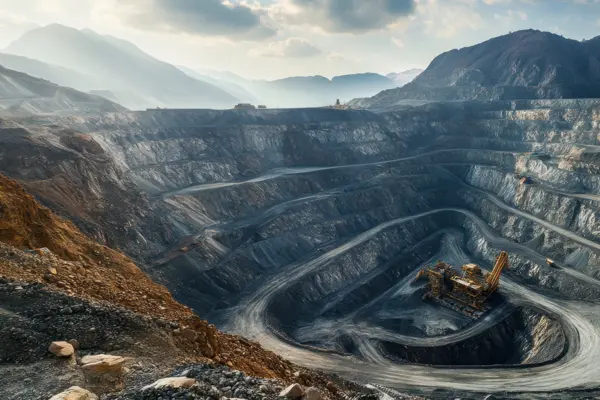
The extraction of mineral-rich mud regularly poses technical challenges for processing plant operators. How can muds with a very high solids content be transported reliably without unnecessarily increasing the amount of energy and chemicals used in the process? This was precisely the question faced by a mining company in northern Mexico, which had to transport silver mud from a dewatering process to the downstream leaching process.
As a global specialist in handling complex media, NETZSCH Pumps & Systems offers tailor-made pump solutions for demanding mining applications. We will show you how to reliably and economically convey highly concentrated silver mud.

Individual Consulting
Challenges when pumping silver mud
Silver mud is produced during ore processing after the mechanical dewatering of a mixture of crushed ore and water. This process step aims to increase the mud's solid content to the greatest extent possible. The higher the concentration of mineral components, the more efficient the subsequent leaching process, whereby the silver is chemically dissolved from the ore. However, as the solids concentration increases, the technical demands on the conveying technology also increase significantly. Silver mud contains large quantities of mineral particles, which considerably increase the medium’s viscosity. At the same time, the sludge’s abrasiveness increases. The solid components cause significant wear on key pump components such as impellers, housings and seals. In addition, the medium’s flow behaviour changes at high solids concentrations. Under these conditions, many pump types lose their delivery capacity or can no longer transport sludge stably. This results in unstable delivery flows, increased wear and frequent maintenance interventions. The requirements of the downstream leaching process also play an important role. A higher solids content in the silver mud improves the efficiency of chemical extraction. At the same time, lower water content reduces the need for expensive, aggressive process chemicals. Operators of processing plants, therefore, face a challenging task: they must reliably transport highly concentrated silver mud while ensuring plant operational safety and economic efficiency.
When pumps become a bottleneck in silver process
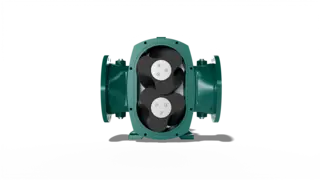
At the processing plant of a large silver mine in northern Mexico, the silver mud was to be transported to the next process stage after dewatering, with a solids content of approximately 60 percent. However, this goal could not be achieved with the existing pump technology. The centrifugal pumps used were only capable of pumping sludge with a solids content of about 30 percent. To transport the silver mud at all, water had to be added back to the already dewatered medium. This resulted in a technically and economically inefficient process. Although energy and chemicals had previously been used to remove water from the mud, they were then added back to ensure pumpability. The consequences were obvious. The increased water content led to higher demand for process chemicals in downstream leaching, further increasing operating costs. At the same time, the silver mud’s high abrasiveness caused considerable wear and tear on the pumps. The centrifugal pumps had to be serviced regularly and were replaced after an average of only three months. In addition, the low solids content impaired the plant’s process optimisation. As the silver mud became more dilute, the silver content per delivery volume decreased, directly affecting the efficiency of the entire treatment process. Searching for an alternative, the operator tested a rotary lobe pump. However, this approach also proved unsuitable for the demanding operating conditions. After only two days of operation, the pump housing was damaged by the abrasive effect of the silver mud.
Stable conveyance of highly concentrated silver mud
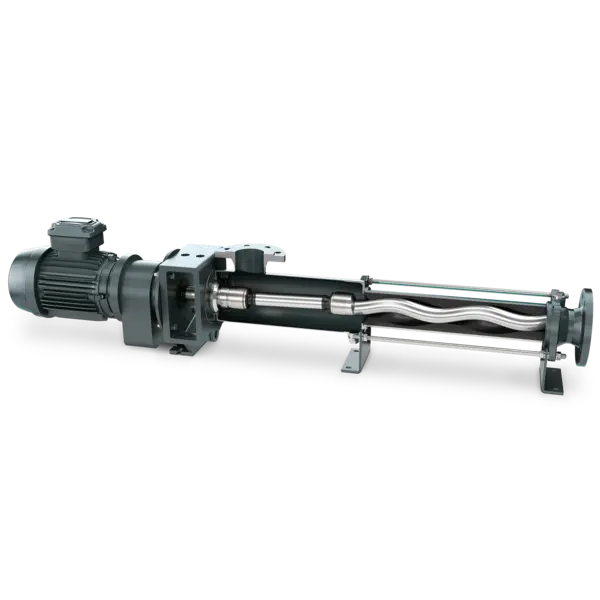
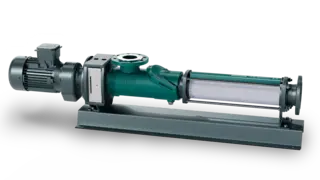
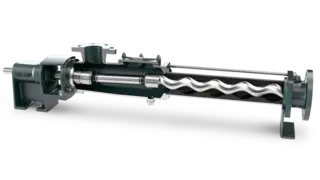
The solution to the problems faced by the northern Mexican mining company was found at NETZSCH with the NEMO® BY progressing cavity pump in industrial design. This pump type is specifically designed for highly viscous, solids-laden media and delivers stable flow even under challenging process conditions. The design is based on a rotor-stator system operating on a progressing cavity principle. The medium is continuously transported through the pump in closed delivery chambers. This continuous positive displacement ensures a uniform flow rate, even with very high solids content in the silver mud. Another decisive factor is the gentle conveyance with low shear stress. The uniform movement of the medium, without turbulence, keeps the mud stable and allows it to be transported reliably even at high viscosity. This prevents segregation or unstable conveyance conditions. A particularly wear-resistant material combination was also selected for this highly abrasive application. The tungsten carbide rotor works with a stator specifically developed for high-abrasion applications. This choice of materials significantly reduces wear caused by mineral particles and extends the service life of the pump components. The pump geometry is also designed for solids-rich media. An enlarged stuffing box and a conical suction housing improve media entry and reduce flow losses. As a result, the operation remains stable even with highly concentrated silver mud. During tests, the water content in the sludge was gradually reduced. Whereas the pumps previously used could only convey mud with a solids content of around 30 percent, the NEMO® progressing cavity pump now transports silver mud with a solids content of up to 65 percent without additional water injection.
This resulted in several measurable advantages for the operator. Eliminating water addition significantly reduces chemical consumption during subsequent leaching. At the same time, more silver ore can be processed per hour because the mud contains a higher concentration of mineral components. The plant's life-cycle costs were also reduced. Despite the abrasive properties of the silver mud, the rotor and stator achieve a service life of around three months. At the same time, maintenance costs have been significantly lower than those of the previously used centrifugal pumps. Today, the mine operates three conveying lines for silver mud with NEMO® pumps. The plant benefits from more stable conveying, lower process costs and higher plant availability.
Contact the experts at NETZSCH if you need to convey highly concentrated muds or other challenging media. We will be happy to assist you in designing the appropriate conveying technology for your application.
NEMO® BY progressing cavity pump in industrial design
- Medium: Silver mud
- Capacity: 10 m³/h
- Pressure: 9 bar
- Speed: 130 rpm
- Temperature: Approximately 30 °C
- Other: Up to 65 % mineral solids