DENSE SLUDGE
Fewer Downtimes and Reduced Maintenance Costs
How Veolia Water North America optimised dense sewage sludge pumping
How do you ensure reliable, around-the-clock pumping of dense sludge in a municipal sewage treatment plant when gas content, long suction lines, and changing pressure conditions interfere with operations? And how do you reduce maintenance costs at the same time? This was precisely the challenge facing Veolia Water North America, the operator of the main sewage treatment plant in Wilmington, USA.
NETZSCH Pumps & Systems, the global specialist in handling complex media, provided the solution. Read on to discover how to significantly reduce your maintenance costs and downtime when pumping dense sludge.

Individual Consulting
Challenges in pumping dense sewage sludge
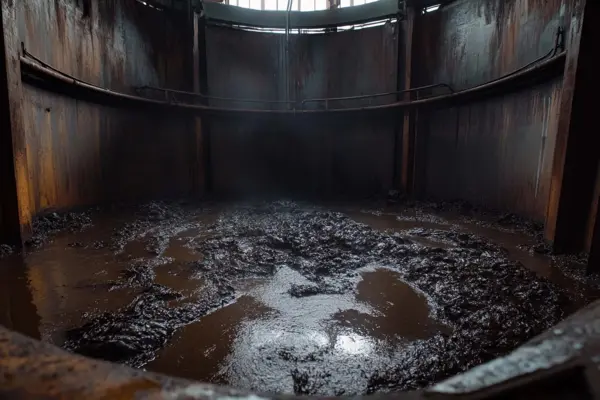
Dense sludge with three to four percent dry matter places high demands on the pumps used. At the Wilmington plant, the process-related boundary conditions were clearly defined. A solids content of three to four percent, a viscosity of around 1,000 cps, delivery pressures of up to three bar and a medium temperature of around 20 °C. At the same time, continuous 24/7 operation was required. In addition, long suction lines in the recirculation system and gas content from the digestion tanks made stable operation difficult. This regularly led to gas entrapment in the centrifugal pumps used, resulting in a loss of suction capacity. Restarting the units requires backwashing the conductors with water. This is an undesirable intervention in a sensitive process, which entailed both operational effort and additional strain on the system. The design limitations of the technology used were also evident in the transport line to the digestion tank. High mechanical loads, combined with poor joint geometries and design weaknesses, led to repeated failures of the progressing cavity pumps used. This resulted in unplanned downtime, increased maintenance costs and limited process stability.
Pumping sludge: High wear and unstable processes
The treatment plant has been operated by Veolia Water North America since 1985. As part of a long-term operating agreement, the company is responsible for all wastewater and sludge treatments. Before the technical conversion, different pump technologies were used in the two applications: Progressing cavity pumps for transporting dense sludge and centrifugal pumps for digester recirculation. Both pumps showed significant operational weaknesses. In the dense sludge transport area, a high angular deviation caused by the design, combined with short coupling rods, resulted in increased wear at the joints. This resulted in frequent failures of the drive components. The service life was sometimes less than a year and in some cases as little as three months. The annual maintenance budget for these two applications amounted to around 250,000 US dollars. Gas binding regularly occurred in the centrifugal pumps used for recirculation in the digestion tanks. The pumps lost suction and had to be returned to service through time-consuming venting and backwashing of the conductor. This additional intervention not only burdened the process but also tied up human resources.
Reliable pumping of dense sewage sludge
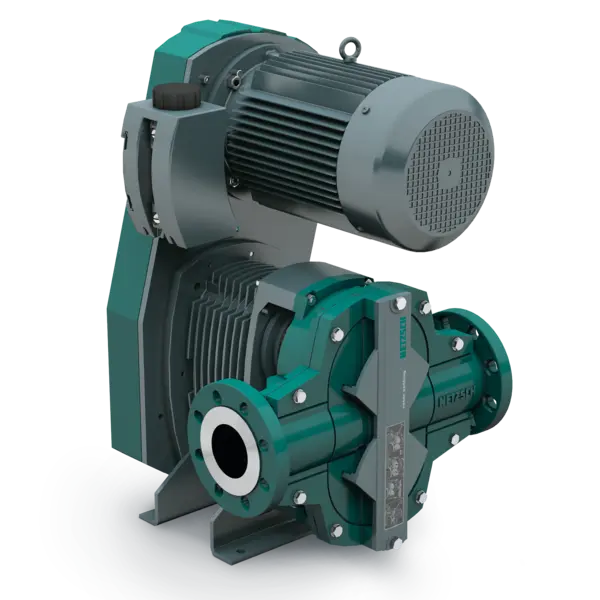
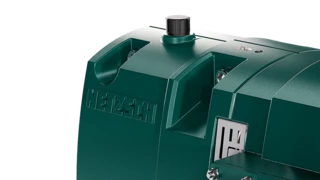
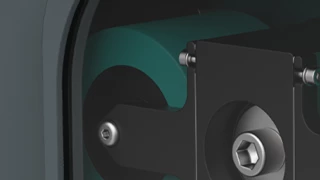
Veolia found the solution to both problems at NETZSCH with the TORNADO® T.Envi® rotary lobe pump. The aim was to implement a technologically robust solution permanently withstanding both the mechanical stress of dense sludge transport and the gas-laden conditions in the digester recirculation system. The TORNADO® T.Envi® operates on the positive displacement principle and is self-priming and dry-running safe. It delivers low pulsation, is reversible and is insensitive to gas content in the medium. These properties were decisive for stabilising both processes. Another advantage is the innovative FSIP® (Full Service in Place) design. Front access to all wear parts allows maintenance work to be carried out directly in the pipeline. This has significantly reduced downtime. The self-priming positive displacement principle also prevents gas from being entrapped in the recirculation. Since installing the TORNADO® rotary lobe pumps, no venting measures or backflushingare necessary. The process runs stably, even with long suction lines and changing pressure conditions. Furthermore, the compact design proved to be advantageous. The small footprint compared to progressing cavity pumps enabled integration intoexisting systems under space constraints, and wear was also reduced despite the high solids content. Even after two years of continuous operation, pumping thickened sludge, no piston replacement was necessary.
Since the changeover, the pumps have been running continuously, 24/7, for thick sludge transport. In addition, the gas binding problem in the digester recirculation system has been completely eliminated. Over almost six months, there have been no unscheduled downtimes. The visual inspection of the pumps takes about 15 minutes and can be done without dismantling. Overall, extended service life, lower service costs and stable process control have led to a sustainable reduction in the previously high maintenance budget.
If you are struggling with wear, gas binding or unstable conveyance in your sludge treatment, contact the experts at NETZSCH. We will support you in designing a reliable and economical solution for your application.
TORNADO® T.Envi® rotary lobe pump
- Medium: Dense sludge
- Capacity: 11 to 70 m³/h
- Pressure: 1 to 3 bar
- Speed: 150 to 450 rpm
- Temperature: 20 °C
- Viscosity: Approximately 1.000 cps
- Other: 3 to 4 % solid content