12.10.2026
Peristaltic Pumps: What to Look for When Choosing a Manufacturer
In many industrial sectors, operators face the challenge of reliably conveying aggressive, abrasive or highly viscous fluids in a way protecting the product. These conditions regularly push conventional pump technologies to their limits.
Peristaltic pumps have established themselves as a robust and versatile alternative in these applications. Choosing the right manufacturer is crucial not only for the quality of the pump itself, but also for the overall performance of your pumping system throughout its entire lifecycle.
How peristaltic pumps work

Customised Consulting
Peristaltic pumps belong to the group of rotary positive displacement pumps. The fluid is transported only inside a flexible tube, which is compressed and released in stages by rotating rollers or shoes. This peristaltic mechanism generates a continuous, low-pulsation flow rate without the medium coming into contact with the pump housing, shaft or seals. This design principle offers several features highly relevant to demanding industrial applications: Complete separation of the medium by the hose reliably prevents contamination and leakage. The pump is self-priming. Abrasive, shear-sensitive or solids-laden media are conveyed gently without valves or seals being subjected to increased wear. Furthermore, the defined delivery volume per revolution allows for precise metering, which is crucial for many processes.
Requirements for a peristaltic pump manufacturer
Choosing a suitable peristaltic pump manufacturer involves more than simply comparing products. Industrial conveying systems run for many years, often under demanding conditions and with high expectations for uptime and ease of maintenance. The demands placed on a manufacturer are correspondingly high, as they must not only supply a product but also provide a reliable partnership throughout the system’s entire life cycle.
Key criteria for selecting a manufacturer include:
- Vertical integration and materials expertise: Hose quality, housing materials and roller geometry have a direct influence on service life and flow rate. Manufacturers with in-house materials and component development can tailor pumps more precisely to specific media and operating conditions.
- Application expertise: The design of a peristaltic pump requires in-depth process knowledge regarding viscosity, temperature, solids content, hose compatibility and operating pressures. An experienced manufacturer incorporates this expertise right from the project planning stage.
- Global service capability: For companies operating internationally, a worldwide service network with fast response times and readily available spare parts is a decisive factor.
- Certifications and standards compliance: Specific requirements apply depending on the industry. These include ATEX for potentially explosive atmospheres, FDA compliance for food and pharmaceutical processes, or ISO certifications for quality management systems.
Applications for peristaltic pumps




Peristaltic pumps have an exceptionally broad range of applications in industrial practice. The advantages of this technology are particularly evident in processes where other pumping principles reach their limits due to wear, leakage or incompatibility with the fluid being handled. Typical applications include conveying sludge and solids-laden media in wastewater and environmental technology, dosing flocculants and precipitants in water treatment and transferring aggressive chemicals in the process industry. In the mining and mineral processing industries, peristaltic pumps are used to reliably convey highly abrasive slurries and suspensions. The technology is also firmly established in the ceramics and building materials industries, as well as in the food and pharmaceutical industries, where media hygiene and contamination-free conditions are paramount. Their self-priming capability, non-backflow design and ability to run dry for limited periods also make peristaltic pumps a robust choice for applications with irregular feed or difficult installation conditions.
Hose quality and ease of maintenance
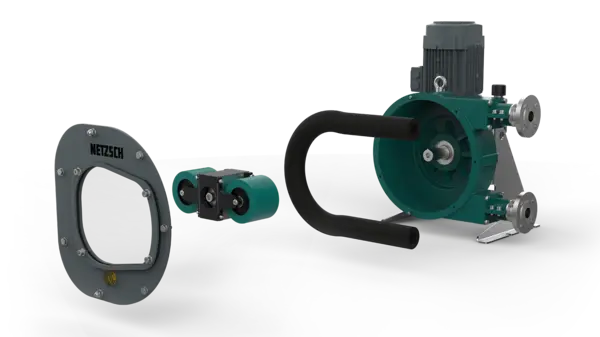
The hose is the wear-prone core component of every peristaltic pump. Its service life and chemical resistance are key factors in determining a system’s ongoing operating costs. Manufacturers developing and qualifying their own hose materials can tailor the chemical, pressure, and temperature resistance of their products to the conditions of a particular application. The selection of the appropriate hose material should therefore always be application-specific and done in close consultation with the manufacturer. Equally crucial is the design of the pump housing with regard to ease of maintenance. A well-thought-out housing design allows the hose to be replaced without special tools or time-consuming dismantling of pipe connections. This is a factor significantly reducing downtime during scheduled maintenance intervals and easing the demands on on-site maintenance staff.
Your partner for industrial peristaltic pump solutions
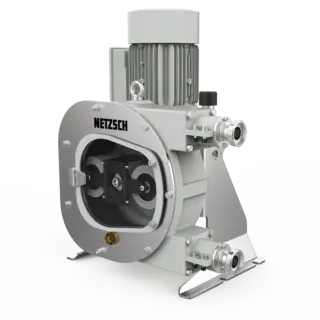
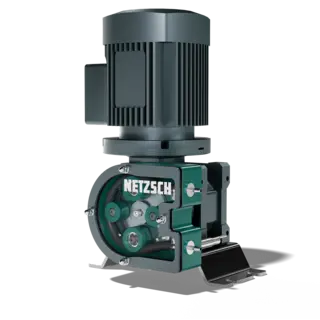
As a global specialist in handling complex media, NETZSCH Pumps & Systems offers PERIPRO® peristaltic pump, a mature technology designed to meet industrial process requirements. The PERIPRO® series, covering a wide range of flow rates and pressure levels, is available in numerous material variants and, depending on the configuration, meets industry-specific requirements from ATEX to FDA compliance.
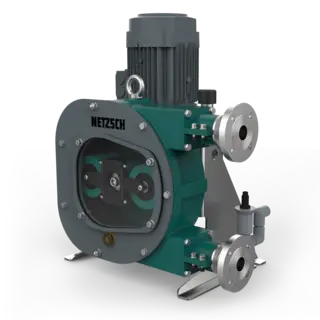
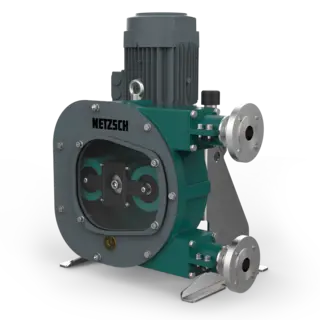
NETZSCH does not see itself merely as a product supplier, but as your partner throughout the entire life cycle of the plant, from design and project planning through to commissioning, maintenance, spare parts supply and technical support. Our experts will assist you in selecting the appropriate peristaltic pump, choosing the right materials for your specific fluid, and integrating the pump into your existing system. Together with you, we will find the solution that reliably meets your process requirements.