
09.11.2026
How to Achieve Precise and Low-Shear Dosing in Battery Production
In battery production, not only does the mixture determine cell quality, but also, to a large extent, the way in which the materials are conveyed and metered. How can a highly viscous, solids-laden and, at the same time, shear-sensitive battery slurry be transported to consistently maintain layer thickness, homogeneity and process reliability?
As a global specialist in handling complex media, NETZSCH Pumps & Systems has the right solution. We’ll show you what matters in battery production and which pump technologies are suitable for the various process stages.
Requirements for pumps in battery production

Customised Consulting
The media used in cell production are among the most challenging materials to handle. The electrode slurry required for coating the anode and cathode contains a multitude of solid particles such as graphite, carbon black and active materials, and often exhibits non-Newtonian rheological behaviour, which means the viscosity is not constant but varies with the shear stress applied. This gives rise to several requirements to be met simultaneously. Conveyance must be gentle and low-shear so as not to alter the material properties. It must be pulsation-free to ensure a uniform layer thickness. And, despite the high solids content, the system must be designed to be low-wear and corrosion-resistant. In addition, lithium’s reactivity places high demands on leak-tightness and safety.
Conveying and dosing electrode slurry
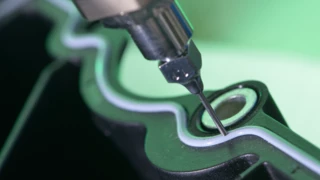
When applying the battery slurry to the carrier foil, the applied layer must remain within a very narrow tolerance range. Even slight fluctuations in the flow rate or pressure can lead to uneven layer thicknesses and, consequently, to a loss of quality or increased scrap. It is therefore crucial to ensure continuous, pulsation-free delivery with consistently high dosing accuracy. NEMO® progressing cavity pumps operate on the positive displacement principle, whereby a rotor forms uniform delivery chambers within a geometrically matched stator. The medium is thus moved continuously and gently from the suction to the discharge side, without any significant pressure fluctuations, pulsations or shear stress. This enables you to deliver even highly viscous and highly concentrated pastes to the coating system, allowing you to apply a thin, homogeneous layer.
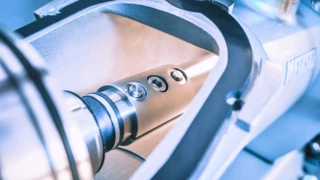
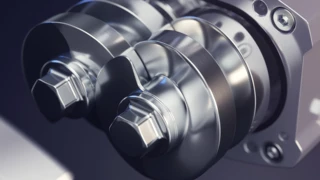
Depending on the medium, viscosity, solids content and process stage, different positive displacement pumps are used. Following products from our portfolio are particularly suitable for battery production:
- NEMO® progressing cavity pumps
For low-shear, low-pulsation pumping of viscous, solids-laden media such as lithium slurry, even at low operating speeds to reduce wear. - TORNADO® rotary lobe pumps
For the transfer of viscous slurries and solids-laden liquids, for example in mixing and vacuum defoaming processes. - PERIPRO® peristaltic pumps
For abrasive and solids-laden media, as well as for the precise, reproducible dosing of electrolytes and additives.
From raw material to cell: Pumps through the whole process

“Our specifically designed pumps for the battery sector enable you to gently convey all the required liquids, including electrode slurries, without pulsation and dose them with extremely high precision whilst fulfilling the most stringent safety and environmental regulations. Together with you, we will find the optimised solution for you and your application in the battery sector.”
Pumps are used throughout almost every stage of the battery production process. Even at the stage of processing raw materials – such as slurries and suspensions containing lithium, nickel, or manganese – robust pumps are required to convey solids-laden media over long operating periods reliably. In the subsequent mixing and wet grinding process, the aim is to transport slurries with high solids content and fluctuating viscosity in a consistent, uniform manner. This is where the pumps are used, amongst other things, in vacuum defoaming. They also play a key role in the processing of electrolytes, as lithium salts must be precisely metered and homogeneously mixed to ensure consistent cell performance. Finally, in the final coating process, precise, low-pulsation metering determines the quality of the electrode.
Process reliability through tailored system solutions
Dosing accuracy depends directly on the viscosity and shear rate behaviour of the medium. Both of these can change during operation. NETZSCH offers solutions optimally tailored to the specific properties of your medium, ensuring consistent dosing throughout the process. This is complemented by a maintenance-friendly design. Full-Service-in-Place technology (FSIP®) enables key components to be serviced without removing the pump from the pipework. This helps reduce downtime and increase your plant’s availability.
Working together to find the right solution
The requirements in battery production are as unique as your formulations, processes and scaling objectives. Rather than a standard solution, we provide a design tailored to your medium and process step.
Our experts will support you right from the start: From the initial process engineering consultation and the selection of the appropriate pump technology, right through to service and maintenance during ongoing operations. Working closely with you, we will find the pump solution sustainably enhancing the quality, process reliability and cost-effectiveness of your battery production.