SLUDGE CAKE
Pumping Sludge Cakes With High Solids Content
How to ensure reliable material transport in sewage treatment plants
How can highly dewatered sludge cake be conveyed reliably, energy-efficiently and with reasonable maintenance costs? This question arose at the wastewater treatment plant in San Mateo (California, USA) when existing concepts were no longer able to meet increasing operational requirements. The high solids content of the filter cake, in particular, posed considerable challenges to existing conveyor systems.
As a global specialist in handling demanding media, NETZSCH Pumps & Systems offers sophisticated solutions for the reliable conveyance of dewatered sludge cake. We will show you how to achieve a stable and low-maintenance conveying process even with high solids content.

Individual Consulting
High solids content and long transport distances
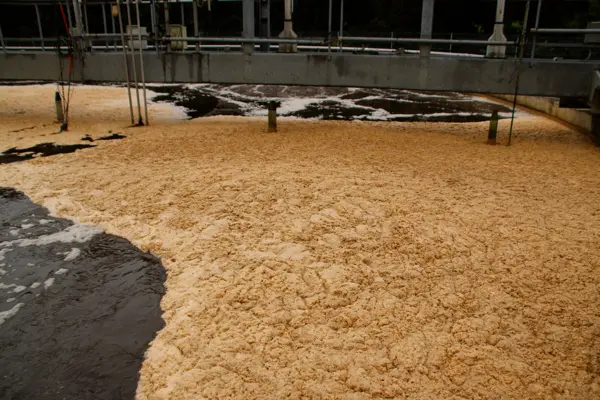
In San Mateo, the sludge was deliberately dewatered to the lowest possible water content to reduce transport costs. The resulting filter cake had a solids content of approximately 18 to 25 percent. However, as dryness increases, the medium’s viscosity and internal friction rise significantly. These properties lead to high pressure losses in the pipeline, uneven conveyance and increased mechanical wear. In addition, long conveyance distances with inclines had to be overcome. Open conveyance systems also caused odour pollution, increased cleaning costs and noise emissions.
Why piston pumps reach their limits
Initially, the sewage treatment plant tested a piston pump system, as is commonly used in concrete pumping. Although the required outlet pressure of 12 to 13 bar could be achieved to realise a pumping capacity of up to five tonnes per hour, the pulsating pumping action had significant disadvantages. High energy consumption, loud noise, and high preventive maintenance costs led to the rejection of this system. Parallel wave-shaped screw conveyors measuring around 18 metres in length and with a pitch of 30 degrees also proved unreliable. Repeated failures of hanging bearings and drive shafts led to downtime without permanently solving the underlying problem.
This is how to pump sludge cakes reliably
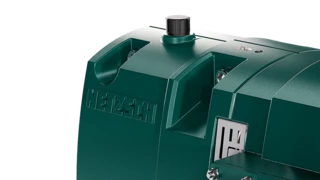
The sewage treatment plant operators found the solution to their sludge-cake pumping problems at NETZSCH. The NEMO® BF hopper shaped pump with aBP-Module® to prevent bridging was developed explicitly for pumping highly viscous, solids-rich media. The technology enables uniform, low-pulsation pumping, thereby maintaining stable process conditions even with dehydrated sludge cake. An integrated forced-feed system with a screw conveyor ensures the medium is reliably drawn from the feed hopper into the Rotorrotor,Rotors,rotorsrotor and stator and continuously conveyed, regardless of its flow properties. The progressing cavity principle, with closed conveying chambers, ensures a constant volume flow largely independent of pressure fluctuations in the pipe system. A system for reducing friction losses has been integrated for further optimisation. The targeted, minimal addition of lubricants via a 360-degree ring nozzle reduces friction on the inner wall of the pipeline, thereby reducing both the required line pressure and energy consumption. The lubricant is added automatically and as needed via a pressure transmitter in combination with a frequency inverter, achieving high process stability without manual intervention. Conveyance takes place entirely within a closed system, eliminating open transfer points and significantly reducing odour and noise emissions as well as cleaning requirements.
With the implemented solution, the sludge cake could be reliably transported to a storage tank over the entire conveyor distance and incline. The screw conveyors previously used were completely replaced. Since commissioning, the main pump has been operating at medium speed and achieving a long service life. A stator replacement was only necessary after several years of continuous operation. At the same time, maintenance costs were significantly reduced, as neither special tools nor additional training were required. In addition, energy consumption was also reduced compared to the previously tested piston pump solution, while process reliability and plant availability were sustainably improved.
Contact the experts at NETZSCH Pumps & Systems if you want to convey dewatered sludge cake or other highly viscous media safely and economically. We will be happy to assist you in designing your application.
NEMO® BF hopper shaped pump with aBP-Module®