NEMO® Multiphase Progressing Cavity Pump
Enhanced efficiency and conservation of fossil resources in oil and gas production through optimal pumping systems
NEMO® Multiphase progressing cavity pumps are an efficient pumping solution for conveying multiphase fluids, that are mixtures of oil, gas, and water. These mixtures can be high gas or with high solids from the oil production wells. These multiphase liquids are to be transferred to gathering stations for further processing.
Multiphase pumps keep oil and gas production viable, even with increased gas, water or sand content coming out of Oil wells. The progressing cavity multiphase pumping principle eliminates the need for space consuming separation devices, separate pumps, compressors, and lines at the well. This allows for continuous and efficient pumping without initial phase separation.
The NEMO Multiphase pumps help conserve natural resources and protect the environment. The closed system with minimal leakage points prevents flaring in fields. High standards for equipment and safety are crucial in oil fields. NEMO® pumps significantly contribute to this safety and reliability. They handle a range of media complexities, from high to low viscosity and from shear-sensitive to heavily loaded with solids.
The innovative design of NEMO® Multiphase progressing cavity pumps enables efficient process control. These pumps comply with the API 676 3rd Edition standard and NACE MR-01-75 requirements, ensuring safe, reliable pumping with maximum efficiency.

Multiphase Pump Advantages
NEMO® Multiphase Progressing Cavity Pump Construction
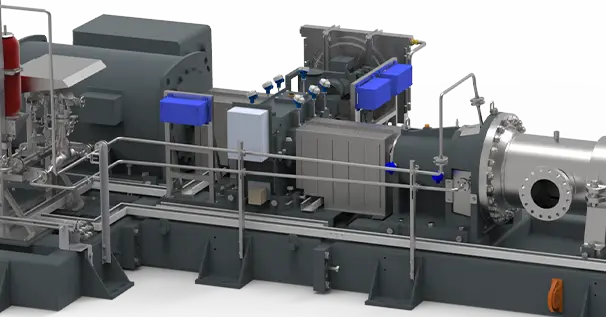
The NEMO® Multiphase Pump is designed to handle the challenges of multiphase fluids under different pressures and temperatures in oil and gas production. Its robust and efficient design ensures reliable performance and easy maintenance, making it ideal for tough environments.
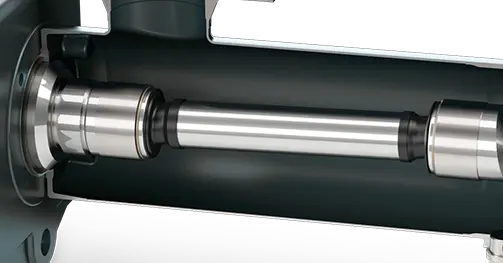
The key components are a rotating Rotorrotor,Rotors,rotorsrotor and a static stator. As the rotor turns within the stator, cavities form between the stator and the eccentrically rotating rotor. These cavities progress continuously in rotating motion along an axial direction. The volume of fluid in each cavity stays constant and moves smoothly, so there’s no shearing, squeezing, or pulsating effect on the fluid during transfer. As the rotor is inserted into the stator it creates sequential cavities. When the rotor is rotating inside the stator these cavities, are moved axially, alternating the opening and closing of each one, progressively and uninterruptedly from the suction to discharge, causing the pumping action. In other words, one cavity reduces volumetrically and another one increases at the same proportion from suction to discharge leading to a continuous and non-pulsating displacement flow.
In elastomer stator designs, pumping occurs through the compression fit between the rotor and stator, creating a physical contact line along the length of the rotor. This is obtained by designing the rotor diameter (dr) slightly greater than the inside diameter of the stator (ds). The pumped liquid lubricates and cool the compressed rubbing surfaces of the rotor and stator.
For liquid applications, the compression between the rotor and stator needs to be relatively tight to ensure the pump operates with optimal volumetric efficiency. The compression fit must not be high or the mechanical load on the rubber can become too much and the rubber material can tear. The compression fit becomes critical when the pump works in multiphase applications. It's important to strike a balance between achieving good volumetric efficiency and avoiding excessive compression, which can lead to frictional heat during periods of gas slugging.
Higher viscosity crude oils have a positive influence on the pumps volumetric efficiency. Proper system integration is crucial to handle process challenges like prolonged slugging. More than in any other application for progressive cavity pumps, the system must be designed to work in harmony with the pumps, ensuring they aren’t damaged during such events. A simple liquid collection tube and recycle line arrangement is a reliable way of metering the flow back into the multiphase pump. Most often actually applied with recycle line flow controlled by a throttle valve which is set manually. The leakage collection device is sized to provide a buffer of fluid, allowing for a reasonable operating period that aligns with the typical slug flow duration based on the field operator's experience.

- Flow rates up to 1000 m³/h at pressures up to 72 bar
- Conveys wide variety of multiphase media
- Handles high-viscosity to low-viscosity fluids, as well as shear-sensitive and solids-laden substances with a high gas volume fraction
- Avoiding the shutdown of low-pressure wells: Ensures continuous operation of low-pressure wells.
- Integrates from low-pressure wells to high-pressure flow lines: Facilitates seamless integration of different well types for efficient operation.
- Minimizes potential leak points: Reduces risk of leaks compared to traditional separation plants.
- Requires minimal personnel: Operates with minimal staffing, promoting efficiency.
- Reduces operating costs: Lowers overall operational expenses.
- Prevents flaring in fields: Minimizes environmental impact by avoiding unnecessary gas flaring.
- Efficiently handles highly viscous media: Optimal for transporting thick substances effectively.
- Ideal for media with high sand and gas content: Handles challenging substances with ease.
- Efficiently transports oil-water mixtures: Ensures effective transport of mixed fluids.

Comprehensive Service and Support
At NETZSCH, our commitment to your success extends well beyond the initial purchase of your NEMO® BO/BS Progressing Cavity Pump. We offer a complete range of aftermarket services to ensure your pump operates at peak efficiency and reliability throughout its lifecycle.
- Consultation: Our experts provide tailored advice to help you select the right pump configuration and optimize your processes.
- Spare Parts: We maintain a full inventory of genuine spare parts to minimize downtime and ensure optimal pump performance.
- Maintenance: Our routine and preventative services keep your pump running smoothly and prevent unexpected breakdowns.
- Repair: Swift and Efficient: Our prompt repair services ensure minimal disruption and a quick return to operation.
- Modernization: We offer modernization services to keep your pump system up to date with the latest technology and performance standards.

Applications NEMO® Multiphase pump

FAQ progressing cavity pumps
Progressing cavity pumps are particularly suitable for pumping highly viscous, abrasive, solid-laden or shear-sensitive media. Typical applications include the chemical, food, environmental, paper and building materials industries, as well as the oil and gas sector.
NEMO® progressing cavity pumps from NETZSCH Pumps & Systems are characterised by gentle, low-pulsation pumping, high dosing accuracy and a wide range of applications. They enable a constant delivery rate even with changing pressures and media compositions.
Progressing cavity pumps can be used to convey low-viscosity to highly viscous media, including slurries, suspensions, pastes, media with a high solids content, and sensitive or gas-laden liquids.
Yes, progressing-cavity pumps are self-priming and exhibit excellent suction performance. This makes them ideal for applications with changing fill levels or difficult suction conditions.
Maintenance requirements are low and predictable. Wear parts such as the rotor and stator can be easily replaced. Maintenance-friendly designs enable short downtimes and high plant availability.
The service life depends on factors such as the medium, speed, pressure and choice of materials. Professional design and the use of original spare parts ensure a long service life and economical operation.
All relevant original spare parts are available for progressing cavity pumps from NETZSCH Pumps & Systems, including rotors, stators, seals, joint parts and other wear-related components. The spare parts are precisely matched to the pump design and ensure high operational reliability.
The correct spare part can be identified by the machine number, serial number, or item number. Spare parts lists, sectional drawings and the operating and maintenance instructions also provide support. Alternatively, the NETZSCH Pumps & Systems service team can provide expert advice on selecting the right original spare part.
The experts at NETZSCH Pumps & Systems will assist you in the design, selection and integration of the right progressing cavity pump – tailored to your specific pumping tasks and process requirements.