DEHYDRATED SEWAGE SLUDGE
Reduced Pressure Loss When Conveying Sewage Sludge
Pumping sludge cakes efficiently with minimal maintenance over long distances
How can dehydrated sewage sludge be conveyed reliably and cost-effectively from the dewatering stage right through to loading? And how can you avoid odour nuisance, high maintenance costs, and uneven loading at the same time? These were precisely the challenges faced by a municipal sewage treatment plant in California, USA, during the modernisation of its sludge treatment system.
As a global specialist in handling complex media, NETZSCH Pumps & Systems offers sophisticated solutions for demanding applications in sewage treatment plants. We will show you how to pump highly viscous sludge cake reliably and efficiently.

Individual Consulting
Complex requirements for sludge pumping
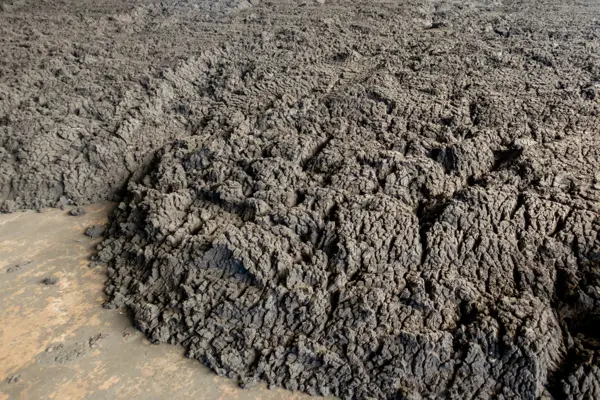
Dehydrated sewage sludge with a dry matter content of around 22 percent places high demands on conveying technology. The highly viscous medium tends to stick, posing a significant risk of bridging. The high solids content leads to increased wear when unsuitable conveying technologies are used, whilst the sticky, paste-like consistency complicates continuous and smooth feeding into the pump. In addition, long conveying distances with directional changes cause pressure losses, directly affecting the plant's energy efficiency and design. Open conveying systems also promote odour emissions and material losses, thereby compromising both the working environment and operational safety. At the same time, the even loading of nine to twelve-metre-long transport trailers presents a technical challenge, as the material is discharged at specific points, requiring manual distribution. This combination of demanding rheological properties and specific plant requirements calls for a precisely tailored pump solution operating both reliably and economically.
Limitations of open conveying systems for sludge cakes
The plant initially used a conveyor belt system moving the sludge from the dewatering unit to the transport vehicles. However, this system proved to be disadvantageous both technically and economically. As the material was discharged in batches, manual distribution within the trailer was required to ensure even loading. At the same time, the open conveying system led to contamination and odour nuisance in the surrounding area. Furthermore, there was significant mechanical wear on the components used, such as conveyor belts, bearings and drives. As the conveying distance increased and additional changes of direction were required, both the complexity and the maintenance costs of the plant rose. In particular, several drives were required at the deflections, which further increased energy consumption and maintenance costs. As part of the plant expansion and the switch to a screw press, there was a need for a closed, flexible, and low-maintenance conveying solution to meet the increased requirements.
How to pump dehydrated sludge cakes efficiently
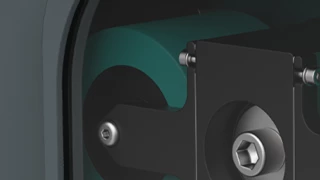
Following consultation with the experts at NETZSCH, the operators of the wastewater treatment plant in California opted for a NEMO® BF hopper shaped pump with aBP-Module®, which is specifically designed for highly viscous media with a high solids content. The operating principle is based on a Rotorrotor,Rotors,rotorsrotor within an elastic stator, enabling continuous, low-pulsation pumping. The pump’s design is specifically tailored to the requirements of this application. A rectangular inlet hopper with an integrated feeding screw ensures optimised product supply through an enlarged housing and active feeding. This allows the paste-like sludge to be drawn in reliably, without air pockets or flow interruptions. The aBP-Module® is used to prevent bridging. Two slowly rotating wheels prevent material build-up in the inlet area, thus ensuring a continuous flow of material, even with highly adhesive sludge. Conveying is done within a closed piping system, thereby preventing odour emissions and material loss. At the same time, the piping layout, utilising valve technology, enables flexible distribution of the medium across multiple discharge points. For long conveyance distances, the optional FLR (Friction Loss Reduction) technology has also been integrated. This involves applying a polymer film to the inner wall of the pipe, reducing friction and thereby minimising pressure losses.
The design and implementation of the overall solution were carried out in close collaboration with the plant operator, the engineering firms involved, and the local sales partner. During operation, a significant improvement in overall plant efficiency was observed. By optimising the pipework layout and utilising FLR technology, the system pressure was reduced from 24.8 bar to 15.2 bar, resulting in a reduction in pressure loss of around one-third. At the same time, stable conveyance was achieved over a 17-metre pipe length. Furthermore, the solution enables uniform loading of several trailers without manual intervention. Maintenance requirements were significantly reduced by eliminating mechanical conveying components, whilst process reliability was noticeably improved even with varying sludge consistencies.
Get in touch with the experts at NETZSCH to have your application customised and optimise your sludge handling. We would be happy to assist you with technical evaluation and system integration.
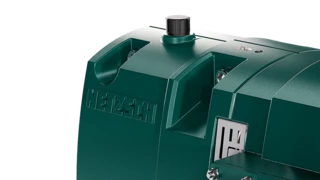
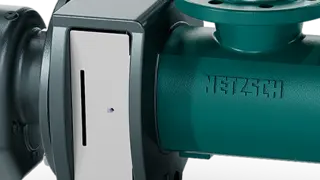
NEMO® BF hopper shaped pump with aBP-Module®