PORK OFFAL
Conveying Pork Offal Despite Temperature Fluctuations
This is how a progressing cavity pump ensures reliable conveyance
Processing pork offal poses particular technical challenges for meat processing plant operators. Different organ structures, variable piece sizes and a high blood content significantly affect conveying behaviour. At the same time, the strictest hygiene requirements must be met. How can reliable conveying be ensured under these conditions without compromising product integrity or process stability?
This was the question facing a meat processing plant in Eastern Pennsylvania (USA). NETZSCH Pumps & Systems, the global specialist in handling complex media, had the solution. We’ll show you how to convey pork offal reliably and hygienically, even when process temperatures fluctuate significantly.

Individual Consulting
Challenges in conveying pork offal
Pork offal differs from many other materials handled in food processing. Organs such as the liver, heart, or lungs have highly variable geometric forms, varying densities and heterogeneous surface structures. In addition, the blood in these organs, as a liquid component, influences lubrication conditions during pumping. A further challenge arises from the typical temperature conditions in meat processing. To ensure product quality, pig carcasses are rapidly cooled down for 24 to 48 hours after slaughter. Subsequent processing therefore takes place at very low temperatures of around 4 °C. At the same time, the systems must be cleaned regularly using CIP (Clean-In-Place) procedures. During this process, hot cleaning fluid at temperatures of up to 65.5 °C circulates through the pumps. These extreme temperature fluctuations place high demands on material resistance.
Temperature fluctuations as a critical stress factor
At the meat processing plant in Eastern Pennsylvania, pork offal was conveyed to a protein processing system. The organs varied in size and were transported along with blood, which served as a natural lubricant. For this application, the operator used a progressing cavity pump from another manufacturer. In practice, however, a serious problem arose: The stator could not withstand the significant temperature differences between pumping operation and CIP cleaning over the long term. The extreme temperature fluctuations led to rapid wear of the stator material. The result was a very short stator service life, requiring frequent spare parts, rising maintenance costs and unplanned downtime. The operator therefore sought a more durable, process-reliable solution that would withstand the thermal stresses of this application over the long term.
Conveying pork offal gently and reliably
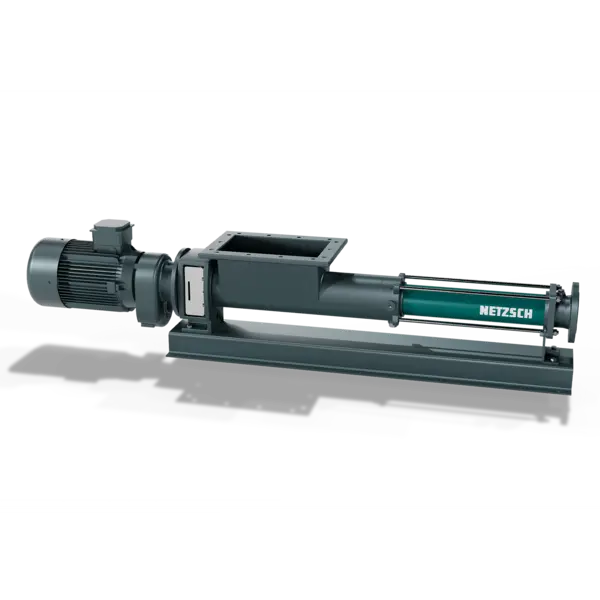
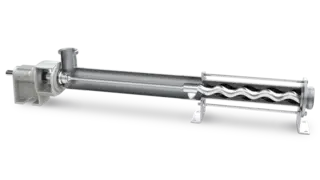
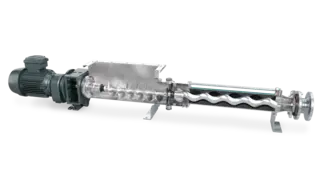
The meat processing plant approached NETZSCH with this requirement. The experts recommended a NEMO® BO/BS pump with a hopper in block construction. The pump is constructed from CIP-compatible stainless steel and features an inlet hopper with an integrated screw conveyor, which ensures reliable product feeding. The pump’s operating principle is based on a metal rotor rotating within an elastomeric stator. This geometry creates closed conveying chambers continuously transporting the medium from the suction to the discharge side. This allows even sensitive or inhomogeneous products to be conveyed evenly and reliably. The technology offers several key advantages when conveying pork offal. The closed conveying chambers ensure gentle conveying with low shear stress, thereby preserving the physical structure of the organ pieces. At the same time, the inlet section with a screw conveyor ensures that even larger and irregularly shaped pieces are reliably drawn into the pump. The selection of suitable stator materials also plays a key role. NETZSCH has developed FDA-compliant elastomers specifically for food-industry applications that possess suitable mechanical and rheological properties. These materials can withstand the significant temperature difference between 4 °C during conveying and 65.5 °C during the Clean-In-Place process on a long-term basis. Furthermore, the entire media-contacting structure is made of polished stainless steel. This hygienic design reduces the risk of product deposits and facilitates reliable cleaning during food processing.
The installed hopper progressing cavity pump has been operating reliably in this application since 2012. Thanks to the optimised elastomer choice, the stator’s service life has been significantly extended. The operator thus benefits from lower spare part costs and reduced maintenance requirements. At the same time, stable, continuous conveyance of pork offal is guaranteed. The system achieves a flow rate of nine cubic metres at an operating pressure of four bar, thereby ensuring a reliable supply to the downstream protein processing system.
Please contact the experts at NETZSCH if you need a reliable solution for conveying pork offal or other challenging meat products. We would be happy to assist you with the technical design of your application.
NEMO® BO/BS pump with hopper in block construction
- Medium: Pork Offal
- Capacity: 9 m³/h
- Pressure: 4 bar
- Temperature: 4 °C to 65,5 °C
- Other: Pieces of organ meat of various sizes containing blood